Hammock camping offers lightweight portability but demands technical optimization for sustained comfort. Proper insulation, suspension angles, and sleeping position fundamentals form the foundation of overnight rest. Nonetheless, many campers overlook critical setup variables that separate restful nights from uncomfortable experiences. The difference between marginal and exceptional comfort hinges on understanding several interconnected factors.

Key Takeaways
- Invest in quality insulation layers like underquilts or sleeping pads to prevent heat loss and eliminate cold spots.
- Sleep diagonally across your hammock to improve spinal alignment and reduce discomfort from traditional lengthwise positioning.
- Set up correctly with 30-degree strap angles, proper tree spacing, and 18-inch ground clearance for optimal support.
- Add essential accessories including hammock pillows, bug nets, and ridgeline organizers for convenience and protection.
- Document your adjustments and experiences to identify successful setups and replicate them on future camping trips.
Invest in Quality Insulation Layers
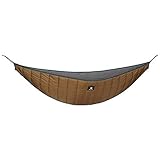
Proper insulation beneath and above the hammock is crucial to overnight comfort. An underquilt effectively traps heat underneath, eliminating cold spots that traditional pads cannot address. Selecting appropriate insulation types is vital—down provides superior warmth-to-weight ratios for minimalists, while synthetic materials offer humidity resistance and simplified maintenance for unpredictable conditions.


Temperature ratings must align with expected weather. Summer models provide lightweight efficiency, whereas winter versions deliver necessary insulation for low temperatures. A dedicated top quilt outperforms standard sleeping bags by maintaining loft when users recline in hammock positions.
Proper adjustment remains critical. Gaps between insulation layers allow cold air infiltration, compromising effectiveness. Confirm underquilts and top quilts conform closely to eliminate these vulnerabilities, maximizing thermal efficiency and enabling longer backcountry seasons with minimal weight penalty.


Master the Diagonal Sleeping Position
Sleeping diagonally across a hammock significantly improves spinal alignment by distributing body weight more evenly along the fabric rather than concentrating it at pressure points. This positioning allows the spine to maintain its natural curve throughout the night, reducing discomfort from the bow-like sag that occurs with traditional lengthwise lying. Proper diagonal placement additionally allows for side sleeping and positional variation, critical factors in preventing localized pain and ensuring restorative rest during extended camping trips.

Positioning for Spinal Alignment
One of the most effective techniques for achieving comfort in hammock camping involves positioning the body diagonally across the suspension system. This sleeping posture significantly improves spine health by creating a flatter lay, which distributes pressure evenly and eliminates stress points.
| Angle | Benefit | Application |
|---|---|---|
| 10-15° diagonal | Natural spinal alignment | Ideal for back sleeping |
| Head-to-foot elevation | Prevents sliding | 8-10 inch difference |
| Dynamic positioning | Side-to-back transitions | Unrestricted movement |
Campers gain complete freedom of movement by adjusting body angle from the hammock’s centerline. This technique accommodates various sleeping preferences without compromising structural support. Experimenting with tension settings and angle adjustments allows each user to uncover their personal sweet spot. Proper positioning guarantees consistent spinal alignment throughout the night, enabling restorative sleep during extended backcountry expeditions.
Eliminating Pressure Points
While positioning the body diagonally establishes foundational spinal alignment, the specific mechanics of this technique directly address pressure point elimination. The 10 to 15-degree angle creates a flatter sleeping surface, distributing body weight evenly across the fabric and eliminating concentrated stress zones.
Critical pressure alleviation comfort techniques include:
- Orienting the body diagonally across the hammock’s centerline to flatten the lay and reduce shoulder and back tension
- Elevating feet 8 to 10 inches above head level, preventing gravitational sliding while maintaining structural stability
- Maintaining 30-degree anchor strap angles to achieve ideal sag depth, which absorbs pressure and improves support
Proper hammock length—60 to 90 centimeters longer than body height—ensures adequate diagonal accommodation. These mechanics work synergistically, transforming the hammock from a curved, pressure-concentrating surface into an ergonomic sleep system that liberates the body from discomfort.
Set Up Your Hammock at the Correct Angle and Tension
Proper hammock setup hinges on achieving the correct strap angle and tension, as these factors directly determine comfort and safety during overnight camping. A 30-degree angle between strap tension and trees provides ideal sag for weight distribution and structural integrity.
The suspension system requires careful calibration. Campers can employ the “finger-gun” method—visually gauging angles with hand positioning—to verify neither excessive tautness nor dangerous sagging exists. The hammock’s low point should remain no higher than 18 inches from ground, enabling safe entry and exit.
Adding a structural ridgeline maintains consistent sag throughout the night, preventing uncomfortable shifting. Combined with a hammock length 60-90 centimeters longer than user height, proper suspension geometry eliminates stress concentration points while maximizing stability and durability.
Add Essential Accessories for Support
Since hammock camping exposes sleepers to temperature loss from below, an underquilt or sleeping pad becomes non-negotiable for thermal comfort during cooler nights. Beyond insulation, strategic comfort improvements transform hammock camping from merely functional to genuinely restful.
Essential accessories significantly refine the overall experience:
- Hammock-specific pillows cradle the head and neck during diagonal sleeping positions, eliminating strain and enabling uninterrupted rest.
- Bug nets and mosquito socks create protective barriers against insects while maintaining airflow, vital for warm, humid environments where freedom from constant irritation matters.
- Ridgeline organizers position headlamps, snacks, and glasses within arm’s reach, preserving sleep continuity by eliminating nighttime exits from the hammock.
These targeted comfort improvements maximize autonomy and minimize disruption, allowing campers to prioritize restorative sleep throughout their expeditions.
Choose the Right Location and Setup
Finding a suitable location requires evaluating trees for diameter and structural integrity, positioning the hammock away from hazards like water sources, and establishing proper angles and heights for both safety and comfort. Trees must measure at least 6 inches in diameter to serve as reliable anchor points, while campsites should maintain a minimum 200-foot distance from water to prevent flooding and wildlife encounters. The strap angle to each tree should reach approximately 30 degrees with the lowest point of the hammock no higher than 18 inches from the ground, optimizing weight distribution and accessibility.
Tree Selection and Assessment
How does one identify trees capable of safely supporting a hammock setup? Proper tree selection demands assessment of tree health and structural integrity. A healthy tree with a minimum trunk diameter of 6 inches provides adequate support for body weight and hammock tension without risk of failure.
Evaluators should examine trees for these critical indicators:
- Absence of bark peeling, fungal growth, or visible decay indicating compromised structural integrity
- Spacing of 12 to 15 feet between anchor points, allowing ideal hammock angle and weight distribution
- Ground clearance free from rocks, debris, and hazards that compromise comfort
Dead, decaying, or unstable trees present unacceptable risks. Furthermore, campers must verify local regulations governing tree usage, as many jurisdictions enforce restrictions protecting forest ecosystems and tree health. Thorough assessment guarantees safe, responsible camping.
Distance and Terrain Considerations
Three critical factors determine ideal hammock placement: proximity to water sources, inter-tree spacing, and ground conditions.
Campers should position their setup at least 200 feet from water sources to lessen flooding risks and humidity accumulation. This distance protects gear and guarantees dry sleeping conditions.
Tree proximity matters significantly—approximately 4 meters between trees prevents excessive strap tension while accommodating comfortable hammock sag. This spacing reduces strain on anchor points and distributes weight effectively.
Site height and terrain assessment are similarly vital. Select level ground free from deadfall, rocks, or vegetation that could compromise stability. Inspect the area thoroughly before committing to camp.
Proper tree proximity combined with raised site selection creates a secure foundation. These considerations work synergistically to establish a safe, comfortable hammock camp that respects both personal safety and equipment longevity.
Angle and Hanging Height
Proper suspension geometry directly impacts comfort and safety in hammock camping. Achieving ideal rest requires precise attention to angles and elevation positioning.
Key setup elements include:
- A 30-degree angle between suspension straps and trees, achieved through careful strap length adjustment, balances sag and stability while reducing strain on anchor points.
- Positioning the foot end 8-10 inches higher than the head prevents unwanted sliding and maintains spinal alignment throughout the night.
- Maintaining the low point at 18 inches maximum from ground level ensures accessibility and minimizes injury risk from potential falls.
These sag adjustments demand experimentation with tree spacing around 4 meters apart. Mastering suspension geometry liberates campers from discomfort, enabling genuine rest in wilderness settings. Proper angles and heights transform hammock camping from merely functional into genuinely restful.
Protect Yourself From Weather and Insects
Shielding oneself from the elements and insects requires a multi-layered approach to hammock camping comfort. A proper tarp setup, angled at 30 degrees, deflects rainfall while remaining securely staked to prevent leaks. Adding a drip line to the tarp prevents water from channeling down suspension straps into the sleeping area. For insect protection, a bug net tucked securely beneath the hammock eliminates gaps where mosquitoes and other pests infiltrate. The net should either be built-in or added separately as a barrier. These defensive measures work synergistically to maintain a dry, pest-free sleeping environment. Combined with strategic site selection—positioning the hammock away from water sources and inspecting for hazards—campers gain the independence to rest undisturbed regardless of weather or wildlife conditions.
Practice and Adjust Your Personal Comfort Sweet Spot
Finding the ideal hammock configuration requires systematic experimentation with setup variables. Tension adjustments directly influence sleeping quality, demanding methodical comfort testing to unveil individual preferences. Campers should pursue a 30-degree angle that produces adequate sag without excessive sinking, then refine through repeated field trials.
- Diagonal positioning across the hammock naturally aligns the spine, reducing pressure point concentration and enhancing rest quality
- Elevating the foot end 8-10 inches above the head prevents nocturnal sliding and stabilizes the sleeper throughout the night
- Strategic sleeping aids—pillows or stuff sacks—provide targeted neck support and eliminate uncomfortable head positioning
Documenting each adjustment’s effects builds personal knowledge for replication on future expeditions. This data-driven approach transforms hammock camping from uncomfortable to genuinely restful, granting freedom through optimized autonomy in sleep setup choices.