Venomous snakes inhabit trails across North America, and encounters happen without warning. A proper snake bite kit can mean the difference between a manageable emergency and a life-threatening crisis. Not every kit on the market delivers reliable performance when seconds count. Seven options stand out above the rest, each evaluated for portability, suction effectiveness, and real-world usability. The rankings ahead may surprise even seasoned hikers.


Key Takeaways
- Snake bite kits for hiking should include a vacuum extractor pump, tourniquet, bandages, and CPR mask in a compact, lightweight design.
- Look for kits with multiple suction cup sizes, one-handed operation, and a durable hard-shell case for versatile outdoor emergency use.
- Suction-based venom extractors work best on shallow, subcutaneous bites and are less effective on deep muscle tissue envenomations.
- Snake bite kits provide only temporary relief; immediate professional medical attention remains essential after any venomous bite occurs.
- Top kits like the Ahier Venom Extractor enhance emergency readiness by bundling essential tools, reducing the need for additional separate purchases.
Ven-Ex Snake Bite & Bee Sting First Aid Kit
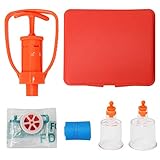
Hikers who venture into snake country need more than luck on their side — they need the Ven-Ex Snake Bite & Bee Sting First Aid Kit by Archer MedTech. This compact venom extractor pump handles snake bites, bee stings, wasp, and spider bites with one-handed operation — critical when seconds matter. Two suction cup sizes accommodate different bite types, while a tourniquet band and CPR face shield add emergency depth. The rugged hard-shell case survives trail abuse. Note: it works best on shallow, subcutaneous bites, not deep muscle injections. Always follow up with professional medical attention.
Best For: Outdoor enthusiasts, hikers, and campers who frequently venture into environments where snake bites, bee stings, or spider bites are a real risk.
Pros:
Cons:
Snake Bite & Bee Sting Emergency First Aid Kit
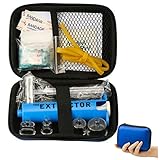
Those venturing into snake country need a kit built for speed and versatility. The Snake Bite & Bee Sting Emergency First Aid Kit delivers both, handling bites and stings from snakes, bees, wasps, and spiders. Four extraction vessel sizes accommodate different wound types, while the one-handed operation allows fast solo response. The hard-shell case travels well on any trail. A tourniquet band helps control venom spread immediately. Best performance comes from subcutaneous bites rather than deep muscle tissue. A bonus CPR face shield adds respiratory emergency coverage. Medical attention remains crucial following any envenomation, regardless of extraction success.
Best For: Outdoor enthusiasts such as hikers, campers, and anglers who frequently venture into environments where snake bites, bee stings, and other venomous encounters are a risk.
Pros:
Cons:
Insect Bite & Snake Venom Extractor Suction Kit
The Insect Bite & Snake Venom Extractor Suction Kit suits outdoor enthusiasts who want one tool covering multiple threats. The yellow reusable pump handles snake bites, bee and wasp stings, mosquito bites, and ant bites with a single suction motion lasting under one minute. Four interchangeable plastic cup sizes adapt to different body areas. The kit ships complete — alcohol prep pads, sting relief pad, razor, tourniquet, adhesive bandage, and instruction manual included. Stronger suction than traditional methods makes it functional beyond emergencies, doubling for home therapy and massage. A practical, multi-threat solution built for hikers, backpackers, and campers who move through unpredictable terrain.
Best For: Outdoor enthusiasts — hikers, backpackers, and campers — who want a compact, multi-threat first aid tool for handling snake bites, insect stings, and bug bites in remote or unpredictable terrain.
Pros:
Cons:
Ever Ready First Aid Snake Bite Venom Extractor Kit Latex Free

Outdoor adventurers who prioritize one-handed emergency response will find this kit worth carrying. Its pump-action design allows solo operation when no help is nearby — a realistic scenario on remote trails. The extractor pulls venom from snake, spider, wasp, scorpion, and centipede wounds with strong suction. Compact enough for any pack or compact first aid kit, it stores in a re-closeable package that keeps contents clean between uses. The kit ships complete — suction pump, tourniquet, alcohol pads, and povidone-iodine pads included. Latex-free construction matters for allergy-prone users. Solid, no-nonsense gear for serious backcountry preparedness.
Best For: Outdoor enthusiasts, hikers, and backcountry adventurers who need a reliable, self-administered emergency response tool for venomous bites and stings in remote settings.
Pros:
Cons:
Gvhntk Snake Bite & Bee Sting First Aid Kit

Hikers who want a versatile, multi-purpose kit will find the Gvhntk Snake Bite & Bee Sting First Aid Kit worth considering. Weighing just 125g, it fits easily into any pack without adding burden. The extractor pump handles rattlesnake bites, bee and wasp stings, spider bites, and scorpion stings. Three suction cup shapes — round, oval, and tourniquet — accommodate different wound types. One-handed operation keeps things practical when seconds matter. The kit includes alcohol pads, bandages, a razor, a first aid mask, and a rubber band. Compact at 5.51×3.8×1.57 inches, it’s built for camping, fishing, and serious trail time.
Best For: Outdoor enthusiasts, hikers, campers, and anglers who frequent environments with snakes, insects, or other venomous creatures and need a lightweight, multi-purpose emergency kit on hand.
Pros:
Cons:
Snake Bite & Insect Sting First Aid Kit

Adventurers facing unpredictable terrain need a kit built for more than just snakebites. The Snake Bite & Insect Sting First Aid Kit handles rattlesnakes, bee stings, wasps, mosquitoes, spiders, and scorpions. Its vacuum extractor pump operates one-handed, pulling venom quickly when seconds matter. The kit includes four suction vessel sizes, a tourniquet, seven alcohol prep pads, seven bandages, a razor, and a CPR shield mask. Everything packs into a waterproof EVA case with a carabiner for quick access on the trail. Compact and reusable, it suits hiking, camping, fishing, and backpacking across demanding environments.
Best For: Outdoor enthusiasts, hikers, campers, and backpackers who frequently venture into wilderness environments where encounters with snakes, insects, and arachnids are a real risk.
Pros:
Cons:
Ahier Venom Extractor Snake Bite First Aid Kit
The Ahier Venom Extractor Snake Bite First Aid Kit is built for the prepared hiker who refuses to be caught off guard in the backcountry. The kit packs an extraction pump, two cup sizes, a tourniquet, and a CPR mask into a compact, lightweight package. The one-way pump delivers strong, continuous suction to pull venom from the wound fast. Two cup sizes handle different bite diameters, while the tourniquet manages venom spread. The included CPR mask protects both rescuer and victim. Whether dealing with snakes, spiders, or bees, this kit covers the necessities without unnecessary bulk on the trail.
Best For: Outdoor enthusiasts, hikers, campers, and anglers who frequently venture into snake or insect-prone environments and want a compact emergency response solution on hand.
Pros:
Cons:
Factors to Consider When Choosing a Snake Bite Kit for Hiking
Choosing the right snake bite kit for hiking requires weighing several critical factors before hitting the trail. Suction power and effectiveness, portability and weight, included kit components, ease of one-handed use, and hard case durability all play a significant role in determining which kit is best suited for backcountry conditions. A kit that fails on any one of these fronts can mean the difference between a manageable emergency and a life-threatening situation.
Suction Power and Effectiveness
When selecting a snake bite kit, suction power and effectiveness rank among the most critical factors to evaluate. Strong vacuum pumps drive deeper penetration, pulling venom from the wound with greater efficiency. Kits offering multiple suction cup sizes accommodate different bite locations and wound depths, giving hikers versatile options in unpredictable field conditions.
One-handed operation matters significantly during emergencies, allowing rapid deployment without assistance. Every second counts in remote terrain, and fumbling with complex mechanisms costs valuable response time.
Effectiveness diminishes considerably with deeper tissue injuries, making subcutaneous bites more manageable than deep punctures. Wiping the wound area with an alcohol prep pad before applying suction improves skin contact and extraction efficiency. Understanding these variables helps hikers choose equipment that performs reliably when conditions are worst.
Portability and Weight
Every ounce carried on the trail demands justification, and snake bite kits are no exception. The best options weigh between 4 and 8 ounces, light enough to forget they’re there until needed. Dimensions shouldn’t exceed 6 x 4 x 2 inches, fitting cleanly into hydration packs, glove compartments, or side pockets without reorganizing everything else.
Hard-shell cases strike the right balance — durable enough to survive trail abuse, light enough to avoid becoming a burden. Secure closures keep contents intact over rough terrain without slowing access when seconds matter.
Kits equipped with carabiners or strap attachments eliminate the excuse of leaving them behind. Attached to a pack strap or belt loop, they remain consistently accessible — exactly where emergency gear belongs.
Kit Components Included
What a kit contains determines whether it functions as genuine emergency equipment or expensive dead weight on the trail. A reliable snake bite kit centers on a quality extraction pump capable of drawing venom efficiently from bites and stings. Multiple suction cup sizes matter—different bite locations and wound diameters demand different coverage to maximize extraction.
Beyond the pump, supporting components carry equal weight. A tourniquet helps slow venom spread through the body, buying critical time before professional medical attention arrives. Alcohol prep pads keep the wound site sanitized, reducing secondary infection risk. A CPR mask adds emergency respiratory support without infection transmission concerns. Finally, a clear instruction manual separates a functional kit from a confusing one when panic sets in and seconds count.
Ease of One-Handed Use
Components only matter if a hiker can actually use them under pressure, and that pressure often includes working with one functional hand. Injuries, unstable terrain, or the need to restrain something else can leave only one hand available. Kits designed with ergonomic features account for this reality directly.
The best extractor pumps allow single-handed attachment, compression, and release without fumbling. Suction cups should lock and detach cleanly, requiring no secondary grip. Speed matters here — delayed venom extraction increases complication risk significantly.
One-handed functionality furthermore eliminates dependence on a second person, which hikers in remote areas frequently cannot afford. When evaluating a kit, testing its single-hand operation before hitting the trail is a practical, non-negotiable step that many hikers overlook until it is too late.
Hard Case Durability
Hard cases separate functional kits from ruined ones when a backpack takes a fall down a rocky slope or gets soaked crossing a stream. Rugged exteriors resist water, dirt, and dust, keeping contents sterile and operational when conditions deteriorate fast. Secure locking mechanisms prevent components from shifting or scattering during rough transport, eliminating the nightmare of missing a critical tool mid-emergency.
Compact dimensions allow hard cases to fit cleanly inside packs, vehicles, or larger first aid kits without consuming unnecessary space. The best options balance lightweight construction with genuine impact resistance, avoiding the trap of bulk without protection. For hikers pushing remote terrain, a hard case is not a luxury feature — it is the difference between a kit that works and one that does not.
Bite Type Versatility
A kit built like a tank still fails if it only handles one type of threat. Trails carry more dangers than rattlesnakes — bees, wasps, spiders, scorpions, and mosquitoes all demand a capable response. The best kits address this full spectrum rather than a single scenario.
Multiple suction cup sizes matter here. Different bites produce different wound profiles, and a single-size cup leaves gaps in coverage. One-handed pump operation keeps response time tight regardless of bite type.
Worth noting: suction extraction works best on shallow, subcutaneous bites. Deep muscle injections — common with certain species — fall outside what any pump kit can effectively address.
Alcohol prep pads and tourniquets round out a versatile kit, handling initial wound care and slowing venom spread across bite types.
Safety and Limitations
Every snake bite kit on the market carries hard limits that hikers need to understand before hitting the trail. Suction extractors work best on shallow, subcutaneous bites, but deep muscle tissue injections require hospital intervention no kit can replace. Venom location and bite depth directly affect extractor performance, so hikers shouldn’t overestimate what suction alone accomplishes in the field.
Tourniquets present another concern. Applied incorrectly, they cause serious complications. Strict adherence to usage guidelines is non-negotiable.
The bottom line: these kits buy time. They are not endpoints. After any bite or sting incident, emergency medical care remains the priority, full stop. Kits that include CPR shields add value by improving overall emergency responsiveness when situations escalate beyond basic venom extraction.
Additional Emergency Tools
When choosing a snake bite kit for hiking, the additional emergency tools bundled inside can mean the difference between an effective response and a critical gap in care. A CPR face shield addresses respiratory emergencies that can follow severe envenomation. A tourniquet controls venom spread and manages serious bleeding when seconds count. Alcohol prep pads clean the bite site before suction is applied, reducing infection risk in remote environments. Multiple suction cup sizes accommodate different bite types and body locations, improving extraction effectiveness across varied situations. Clear instructions and educational materials matter too — panic degrades decision-making, and step-by-step guidance keeps responders focused. Hikers should evaluate each kit’s complete tool inventory, not just its suction device, before committing to it as their primary trail safety solution.