Backpackers heading face a crowded market of altimetry devices. Compact 4-in-1 units dominate the environment, merging altitude tracking with barometric pressure, temperature, and navigation capabilities. Battery-free barometers offer reliable alternatives for minimalists. Yet selecting the right device requires understanding specific terrain demands and weather forecasting needs. The differences between these options prove substantial for serious trekkers.

Recommended Altimeters


Key Takeaways
- Battery-free analog altimeters provide reliable, maintenance-free operation ideal for extended backcountry expeditions in remote locations.
- Compact, lightweight designs with leather cases fit easily in packs while offering portability for recreational backpackers.
- Digital 4-in-1 devices consolidate altitude tracking, barometric pressure, temperature, and compass functions into single lightweight units.
- Extended altitude ranges above 15,000 feet suit mountaineers tackling high-altitude terrain requiring precise elevation tracking.
- Rugged construction with IP67+ waterproof ratings and temperature resilience from -20°C to 50°C ensures durability in harsh conditions.
Digital Altimeter Compass with Weather Forecast

For hikers and climbers requiring integrated elevation tracking with predictive weather capability, the AMTAST digital altimeter compass delivers dual-mode functionality that consolidates vital monitoring into a single device. The barometer analyzes pressure shifts to forecast weather 12-24 hours ahead across 30-50 kilometer ranges. Users toggle between altimeter and barometer modes via the [ALTI/+] button for seamless operation during expeditions. Real-time altitude tracking monitors ascending and descending changes from designated starting points, enabling precise elevation progress assessment. The device stores 256 historical records with adjustable intervals between 1-60 minutes, accessible through the [HISTORY] button. A rechargeable battery with power-saving dormancy mode and a 5-second backlight improves extended field use.
Best For: Outdoor enthusiasts, hikers, and climbers who need reliable elevation tracking combined with weather forecasting capabilities for multi-day expeditions and mountain navigation.
Pros:
Cons:
Sun Company Altimeter 203 Battery-Free Barometer
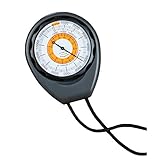
The Sun Company Altimeter 203 stands out as an excellent choice for backpackers seeking reliable altitude and weather data without the burden of battery management. This analog instrument features a durable ABS plastic housing with an adjustable dial that compensates for barometric pressure systems, delivering accurate altitude readings from 0 to 15,000 feet. The barometer measures pressure in inches of Mercury, enabling weather-trend forecasting. Its analog design eliminates dependency on batteries, offering superior reliability in remote conditions. The included lanyard guarantees convenient attachment to gear, while the easy-to-read scale and detailed instructions support straightforward operation. Weighing minimal pack burden, the Altimeter 203 proves indispensable for elevation-sensitive route planning and weather monitoring.
Best For: Backpackers, hikers, and campers who need reliable altitude and weather data without the hassle of battery management.
Pros:
Cons:
Digital Altimeter Compass Thermometer Barometer 8-in-1
Backpackers seeking a single compact instrument to monitor altitude, navigation, weather conditions, and temperature will find this 8-in-1 device eliminates the need to carry multiple specialized tools. The altimeter tracks elevation from -2,300 to 29,500 feet with 3.3-foot resolution, ideal for mountain terrain. Its electronic compass displays eight directional readings, responding to magnetic field variations for reliable navigation. The barometer measures air pressure between 300-1100 mbar, detecting weather pattern shifts crucial for trip planning. The thermometer operates across 14°F to 140°F with 0.1°C precision and switchable temperature units. Additional features include time display and a five-second electronic backlight for low-light conditions, making this multi-function instrument vital for serious backpackers managing variable alpine environments.
Best For: Serious backpackers and mountain climbers who need a compact, multifunctional device to monitor altitude, weather conditions, navigation, and temperature in alpine environments without carrying multiple specialized instruments.
Pros:
Cons:
Handheld Waterproof Clinometer for Forestry & Hiking

Accurate slope and height measurements transform field work from guesswork into precision—a capability this aluminum alloy clinometer delivers through its deflection angle lens system. The device measures height in both inches and millimeters, making it adaptable for varied documentation needs. Its waterproof and shockproof construction withstands demanding outdoor conditions, from dense forests to rocky terrain. The palm-sized form factor fits effortlessly into backpacks, while the included nylon carry bag provides protection during transit. Forestry professionals and hiking enthusiasts alike rely on this tool for tree height assessment and slope evaluation. Built for durability rather than unnecessary features, it represents vital equipment for anyone requiring field measurements without compromising portability.
Best For: This clinometer is best for forestry professionals, outdoor surveyors, and hiking enthusiasts who need reliable, portable tools for measuring tree heights and slopes in the field.
Pros:
Cons:
Sun Company Altimeter 202 Battery-Free Barometer
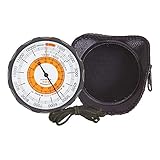
For hikers and backpackers seeking a dependable instrument that requires no batteries, Sun Company’s Altimeter 202 delivers reliable altitude and barometric pressure readings across elevations from sea level to 15,000 feet. The analog design features an adjustable dial that compensates for varying pressure systems, ensuring accuracy in changing conditions. Its compact form fits easily in a pack, secured by a soft leather case with belt loop and lanyard attachment. The easy-to-read scale requires minimal interpretation during field use. Included instructions guide users through calibration procedures. This instrument pairs effectively with complementary Sun Company tools—compass and thermometer—creating a complete mechanical weather and navigation system ideal for backcountry expeditions.
Best For: This product is best for outdoor enthusiasts like hikers, backpackers, and campers who need reliable altitude and pressure readings without depending on batteries or electronic devices.
Pros:
Cons:
Digital Altimeter Compass Thermometer for Hiking Camping

When traversing challenging terrain where weather shifts unexpectedly and altitude changes rapidly, a multifunctional digital altimeter becomes indispensable. This device consolidates barometer, compass, thermometer, and altimeter into one compact unit, measuring altitudes from 0 to 9,000 meters with 1-meter precision. The ultra-bright backlit LCD guarantees readability in variable conditions, while barometric pressure monitoring provides early weather warnings through trend analysis. Push-button operation remains responsive in spite of demanding outdoor use. ABS housing delivers durability against wear and impact. A specialized hook design allows secure attachment to gear. Real-time altitude data supports navigation accuracy and safety during high-altitude mountaineering, while pressure readings inform activities like fishing where atmospheric conditions influence fish behavior.
Best For: This multifunctional device is best for outdoor enthusiasts, mountaineers, hikers, and anglers who need reliable navigation, weather monitoring, and altitude tracking in remote or high-altitude environments.
Pros:
Cons:
Hiking Digital Altimeter 4-in-1 Outdoor Meter
The multi-functional design of this 4-in-1 device makes it ideal for backpackers seeking a single, lightweight tool that consolidates altitude tracking, barometric pressure monitoring, temperature readings, and directional navigation. Built ruggedly to endure harsh wilderness conditions, the device operates maintenance-free without requiring batteries. Its altimeter provides precise elevation data critical for terrain navigation, while the integrated barometer forecasts weather shifts, enabling proactive preparation. The thermometer delivers environmental awareness across varying climates. Though the instrument prioritizes durability and portability over professional-grade accuracy, it offers practical utility for recreational expeditions. This consolidation eliminates carrying multiple instruments, reducing pack weight while maintaining crucial monitoring capabilities for extended backcountry ventures.
Best For: Recreational backpackers and outdoor enthusiasts who need a lightweight, all-in-one tool for hiking and camping without the need for battery replacements or professional-grade precision.
Pros:
Cons:
Factors to Consider When Choosing Backpacking Altimeters
When selecting a backpacking altimeter, critical performance metrics determine its utility in the field: altitude range capabilities must match terrain demands, battery life must sustain multi-day trips, and weather forecasting accuracy should inform route decisions. Durability and weather resistance become crucial during extended backcountry exposure, where equipment encounters rain, temperature swings, and physical stress. Display readability and backlight functionality prove vital for quick reference during dawn ascents and low-light conditions when navigation decisions are time-sensitive.
Altitude Range Capabilities
One of the most critical specifications to evaluate when selecting a backpacking altimeter is its maximum altitude ceiling. Models vary significantly, with some capping out at 15,000 feet while others reach 29,500 feet. This range difference directly impacts versatility across diverse terrain and climbing objectives.
For alpine and high-altitude mountaineering expeditions, extended range capabilities prove vital. A wider altitude ceiling accommodates summits exceeding typical hiking elevations, preventing measurement gaps during technical ascents. Conversely, hikers focused on moderate trails may find lower-range models sufficient and potentially more affordable.
Beyond maximum altitude, assess the device’s low-altitude performance. Effective readings in depressions and valleys guarantee consistent functionality across varying topography. Precision measurement resolution—ideally within a few feet—further improves navigation accuracy, enabling precise elevation gain tracking during climbs and descents.
Battery Life And Power
Power management represents a fundamental consideration that directly influences expedition duration and reliability in remote environments. Digital altimeters typically feature rechargeable batteries with limited runtime, demanding strategic recharging opportunities during extended backcountry trips. Conversely, analog battery-free models eliminate power concerns entirely, offering consistent functionality without depletion risks.
Backpackers should evaluate digital options’ power-saving capabilities, including auto-sleep modes and backlight timers, which substantially extend usable battery life. These features prove critical when recharging infrastructure remains unavailable for days or weeks.
Additionally, equipment weight becomes relevant when digital altimeters require chargers or replacement batteries in pack inventory. Analog altimeters avoid this burden entirely, providing maintenance-free operation. The choice ultimately depends on trip length, available resupply options, and acceptable gear overhead, with battery-free designs favoring longer expeditions into truly remote terrain.
Weather Forecasting Accuracy
Since barometric pressure fluctuations reveal incoming weather patterns, altimeters equipped with reliable pressure-sensing capabilities become vital decision-making tools for backcountry navigation. Effective models measure barometric pressure with 0.1 millibar resolution, detecting subtle atmospheric shifts that indicate approaching weather systems. This precision allows forecasters to predict conditions 12 to 24 hours ahead, providing actionable intelligence for route planning and camp decisions.
Advanced altimeters display real-time pressure changes, permitting backpackers to respond immediately to deteriorating conditions. Some units offer forecasting ranges extending 30 to 50 kilometers, enhancing preparedness across variable terrain. Calibration functionality proves important—users must adjust settings for local altitude and pressure variations to maintain accuracy. Reliable weather forecasting transforms altimeters from elevation tools into thorough outdoor safety instruments.
Durability And Weather Resistance
Three critical material choices—ABS plastic, aluminum alloy, and reinforced composites—form the foundation of reliable backcountry altimeters. These materials withstand rough terrain exposure and accidental impacts without compromising accuracy.
Waterproof and shockproof certifications are non-negotiable specifications. Water resistance protects against rain and stream crossings, while shock resistance guarantees functionality after drops on rocky surfaces. Look for devices rated IP67 or higher for reliable submersion protection.
Temperature resilience directly affects performance across seasonal variations and elevation changes. Altimeters operating effectively from -20°C to 50°C maintain consistent readings in alpine environments where conditions fluctuate rapidly.
Battery-free mechanical models eliminate power concerns during extended expeditions, offering uninterrupted operation regardless of environmental stress. Selecting durable, weather-resistant altimeters guarantees dependable elevation data when route-finding decisions matter most.
Display Readability And Backlight
While durability guarantees an altimeter survives the backcountry, a readable display determines whether users can actually interpret the data when it matters. Clear, high-resolution screens allow quick altitude assessment during time-sensitive situations in challenging outdoor conditions. High-contrast displays promote easy reading from multiple angles, particularly when devices are mounted on backpacks or worn on wrists.
Backlighting proves crucial for early morning and late evening treks when ambient light diminishes. Auto-activating backlight systems balance functionality with battery conservation, illuminating displays only when low-light conditions trigger activation. Display size and placement merit careful evaluation; screens must be large enough for legibility without adding excessive bulk.
These readability factors directly impact user confidence and safety during mountain navigation and weather monitoring.
Portability And Weight Considerations
Every gram matters on extended backcountry treks, making portability and weight critical evaluation criteria for selecting an altimeter. Lightweight materials such as aluminum alloys and durable plastics minimize bulk without sacrificing durability. Multi-function devices integrating altimeter, barometer, and compass capabilities eliminate the need for separate instruments, reducing overall pack weight significantly.
Handheld models designed to fit comfortably in a palm facilitate quick readings during movement without unpacking gear. Lanyard attachments and compact carry cases improve accessibility, keeping devices immediately available for elevation checks without consuming backpack space.
Experienced hikers prioritize altimeters weighing under 100 grams while maintaining fundamental functionality. This balance between portability and performance guarantees navigation tools don’t burden long-distance expeditions while remaining reliable for critical elevation data collection throughout varied terrain.
Additional Multifunctional Features Included
Beyond weight considerations, modern backpacking altimeters integrate multiple functions that extend their utility in the field. Integrated barometers monitor air pressure trends to predict weather changes, enhancing safety during unpredictable conditions. Temperature sensors provide real-time environmental data vital for decision-making across fluctuating climates.
Digital compasses offer navigational assistance important for unfamiliar terrain exploration. Historical data recording functions allow backpackers to track altitude and pressure changes over time, facilitating fitness assessment and trail impact analysis.
Built-in backlight functionality guarantees readability during early morning or late evening excursions when visibility diminishes. These combined features transform a basic altimeter into a thorough outdoor tool, eliminating the need to carry separate devices while maximizing information available for route planning and safety decisions.
Conclusion
While skeptics argue that smartphones render dedicated altimeters obsolete, backcountry reality proves otherwise. Dedicated devices operate reliably without battery drain, function in extreme cold, and require zero connectivity. The seven altimeters reviewed—from battery-free barometers to multifunctional 8-in-1 units—deliver field-tested durability that smartphones cannot match. Selecting one based on weight, display visibility, and barometric accuracy guarantees trekkers maintain elevation awareness and weather prediction capability, regardless of terrain or conditions encountered.