Traversing rugged terrain demands reliable gear. A quality GPS device can mean the difference between a successful summit and a dangerous situation. The market offers solid options under $100, and not all of them cut corners to hit that price point. Six devices stand out from the rest, each tested against real-world conditions worth examining closely.


Key Takeaways
- The Garmin eTrex 10 offers reliable GLONASS-supported navigation with a preloaded worldwide basemap, making it ideal for minimalists and geocachers on a budget.
- Look for devices with at least IP66 weather resistance, shock-resistant construction, and physical buttons for dependable performance in harsh outdoor conditions.
- Multi-GNSS support across GPS, GLONASS, Beidou, and Galileo improves positional accuracy to within 1-3 meters, essential for reliable trail navigation.
- Budget hiking GPS devices should provide a minimum of 20 hours of active battery life, with sunlight-readable screens of at least 240×320 pixel resolution.
- The Rugged Waterproof Handheld GPS Navigator delivers 36-hour battery life, 32 GB storage, and preloaded USA Topo maps, offering strong value under $100.
Military GPS Smart Watch for Men with Offline Map
Outdoor adventurers who demand reliable navigation without cell service will find the Military GPS Smart Watch a purpose-built tool for serious trail work. Compatible with GPS, BeiDou, Galileo, and GLONASS, it locks satellites in 8–40 seconds. Offline maps function in remote terrain without internet. Built-in compass, altimeter, and barometric pressure sensor deliver real-time positional data. IP68 waterproofing handles rough conditions. Health tools include heart rate, blood oxygen, sleep, and stress monitoring. Over 100 sport modes track workouts thoroughly. Battery yields 7 days of general use on a 2-hour charge. It pairs with Android 9.0 and iOS 13.0 devices.
Best For: Outdoor adventurers and hikers who need dependable off-grid navigation, comprehensive health monitoring, and rugged durability in a single wrist-worn device.
Pros:
Cons:
Rugged Waterproof Handheld GPS Navigator with Topo Maps

Hikers who demand durability without overspending have one serious contender to consider. The Rugged Waterproof Handheld GPS Navigator delivers IP66-rated weather resistance, multi-GNSS support across GPS, GALILEO, BEIDOU, and QZSS networks, and location accuracy within six feet. Its 3.2-inch sunlight-readable screen and physical buttons handle real trail conditions. A 3-axis compass and barometric altimeter provide reliable heading data even while stationary. The device runs 36 hours per charge via USB-C, comes preloaded with USA Topo maps, and stores additional maps across 32 GB of internal memory. Compact, capable, and built for punishment.
Best For: Budget-conscious hikers and outdoor enthusiasts who need a rugged, reliable GPS device capable of handling demanding trail conditions without relying on a smartphone.
Pros:
Cons:
Multifunction Handheld GPS Altimeter Barometer Compass
The Multifunction Handheld GPS Altimeter Barometer Compass suits budget-conscious backcountry travelers who demand reliable, multi-sensor data without overspending. Running on a GPS and Beidou dual-navigation system, it delivers accurate dual-satellite positioning in demanding terrain. The unit reads altitude, climbing speed, atmospheric pressure, compass bearing, temperature, humidity, and time — core metrics for serious trail navigation. Built from high-quality plastic with a top-tier chip, it withstands temperatures from -20°C to 60°C. USB charging feeds a large-capacity battery built for extended field use. A built-in mini torch adds emergency illumination capability, making this device a competent, affordable companion for rugged outdoor pursuits.
Best For: Budget-conscious backcountry travelers and outdoor enthusiasts who need reliable multi-sensor navigation data without a premium price tag.
Pros:
Cons:
A6 Rugged Waterproof Handheld GPS for Hiking
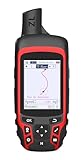
Rugged terrain demands reliable navigation, making the NiesahYan A6 a solid choice for budget-conscious hikers who refuse to compromise on durability. The device supports four satellite systems—GPS, Galileo, BeiDou, and QZSS—delivering positioning accuracy under five feet. Its 3500mAh battery sustains 20 hours of navigation, while the waterproof, non-slip build handles punishing conditions. The 2.4-inch sunlight-readable display keeps data visible on exposed ridgelines. Hikers can store 1,000 waypoints and record return tracks. No pre-installed maps means pre-trip planning is crucial. A two-year warranty backs the investment, reinforcing the A6’s credibility as serious trail gear at an accessible price.
Best For: Budget-conscious hikers and outdoor enthusiasts who need a durable, reliable GPS navigator capable of handling rugged, challenging terrain.
Pros:
Cons:
Garmin 010-00970-00 eTrex 10 Worldwide Handheld GPS Navigator

Minimalists and budget-conscious trekkers will find their match in the Garmin eTrex 10. Built for the trail, this rugged navigator packs WAAS-supported GPS with GLONASS assistance and HotFix technology for reliable positioning. Its IPX7 waterproofing handles the elements, while two AA batteries deliver 20 hours of runtime. The 2.2-inch monochrome display keeps navigation simple and readable. With 6 MB of storage, a preloaded worldwide basemap, waypoint tracking, and elevation logging, it covers critical hiking functions. Paperless geocaching support adds versatility. USB connectivity facilitates data syncing via Garmin Connect, making this stripped-down navigator a dependable workhorse for no-frills outdoor adventurers.
Best For: Budget-conscious hikers, geocachers, and minimalist outdoor adventurers who need a reliable, no-frills GPS navigator for trail use.
Pros:
Cons:
NAVA F30 Handheld GPS Navigation Device for Outdoors

Budget-conscious hikers get a capable multi-system navigator with the NAVA F30. It pulls signals from GPS, GLONASS, Beidou, and Galileo simultaneously, delivering solid positioning across varied terrain. The 2.2-inch transflective display holds up in direct sunlight, and the preloaded worldwide basemap handles backcountry basics. Vector, DEM, and raster maps expand coverage further. Two AA batteries push 20 hours of runtime, a practical advantage in remote settings. Internal 4GB storage expands to 32GB via TF card. Weighing just 0.18 pounds, it carries light. Paperless geocaching, multiple data formats, and a one-year warranty round out a competitive budget package.
Best For: Budget-conscious hikers, campers, and outdoor enthusiasts who need a reliable multi-system GPS navigator with long battery life and lightweight portability.
Pros:
Cons:
Factors to Consider When Choosing a Hiking GPS Under $100
Selecting a hiking GPS under $100 demands careful evaluation of five core factors that separate a reliable trail companion from a costly disappointment. Accuracy and precision, battery endurance, rugged weather resistance, mapping capabilities, and display legibility in harsh sunlight all directly impact performance when routes get technical and conditions turn unforgiving. Understanding how each factor stacks up across budget-friendly models helps hikers make informed gear decisions before boots hit the trail.
GPS Accuracy and Precision
GPS accuracy separates a reliable trail companion from a frustrating piece of kit. High-end units can pinpoint a location within 1-3 meters under ideal conditions, but real-world terrain tells a different story. Urban canyons and dense forest canopy can throw precision off by up to 30 feet — a significant margin when maneuvering tight switchbacks or unmarked trailheads.
Multi-GNSS support is a critical spec worth scrutinizing. Devices pulling signals from GPS, Galileo, BeiDou, and GLONASS simultaneously deliver stronger positional reliability across varied environments. Beyond satellite connectivity, onboard barometers and compasses add meaningful layers of navigational data, particularly for altitude tracking and directional orientation.
Satellite lock time is significant as well. Premium models acquire a signal in 8-40 seconds, minimizing downtime and keeping hikers moving efficiently through the backcountry.
Battery Life Matters
Battery life consistently ranks among the most critical specs when evaluating a hiking GPS under $100. Serious trail users should target models delivering a minimum of 20 hours of active use—enough to power through demanding multi-day routes without constant recharging anxiety. Many budget-tier units running rechargeable batteries push that figure to 36 hours or beyond on a full charge, a meaningful advantage in the backcountry. Standby performance matters similarly; select models sustain up to 30 days on low-power settings, preserving juice during rest periods between navigation demands. USB charging support adds flexibility, enabling top-offs from power banks mid-trail. Devices engineered with low-power-consumption technology stretch every charge further—a decisive edge when reliable power sources remain miles away.
Durability and Weather Resistance
Durability separates capable trail gear from gear that fails when conditions turn hostile. Hikers should prioritize GPS units carrying IP66 or IP68 ratings, confirming genuine resistance to dust and water intrusion. These ratings matter when rain hits hard or trail dust coats everything.
Shock-resistant construction handles drops on rocky terrain without compromising internal components. Units built from rugged materials extend service life considerably beyond standard consumer electronics. Temperature tolerance ranging from -20℃ to 60℃ guarantees reliable operation across alpine cold and desert heat alike.
Physical button interfaces outperform touchscreens in wet or gloved conditions, maintaining full operability when fingers are wet or wrapped in cold-weather gear. Devices that have passed rigorous outdoor testing deliver verified performance rather than manufacturer claims alone.
Map and Navigation Options
A tough unit means little if it cannot tell a hiker where they are or where they need to go. Preloaded topographical maps remain crucial, giving hikers accurate terrain elevation data and trail detail right from the start. Multi-satellite support — covering GPS, Galileo, BeiDou, and GLONASS — sharpens positional accuracy when tree canopy or canyon walls compromise signal reception.
Offline map capability is non-negotiable for remote terrain where cellular coverage disappears entirely. Waypoint storage allows hikers to mark trailheads, camps, or critical landmarks and retrace routes without guesswork. Units equipped with a built-in compass and barometric altimeter extend navigation precision further, delivering reliable heading data and real-time elevation readings independent of satellite connectivity. These combined features define a capable trail navigator.
Display Readability Outdoors
Display readability outdoors separates functional trail tools from frustrating ones. Transflective color displays outperform standard screens under direct sunlight, making them a priority spec for budget-conscious hikers. A resolution of 240 x 320 pixels delivers map clarity sharp enough to read trail data without squinting or second-guessing.
Sunlight-readable screens reduce glare rather than just increasing brightness, keeping critical wayfinding information visible when conditions get harsh. Compact 2.2-inch displays are common in this price range, so pixel density and screen brightness become defining performance factors rather than secondary considerations.
Physical buttons remain underrated. When wearing gloves or maneuvering through wet conditions, touchscreen sensitivity drops significantly. Devices that pair physical controls with a readable display give trail users a reliable, all-weather interface that performs when conditions work against them.
Device Size and Weight
Every ounce counts on a long trail, and hiking GPS units under $100 should clock in below 8 ounces to stay practical across multi-day routes. Battery weight factors into that total, so hikers need to account for a full load before heading out.
Display size should land between 2 and 3 inches — enough screen real estate to read terrain data without inflating the footprint. Rugged builds do add slight weight, but durability in harsh conditions justifies the tradeoff.
Manufacturers relying on quality plastics and durable composites hit the right balance between structural integrity and reduced load. A bulky GPS that fatigues the carrier defeats its own purpose. Lean, tough, and trail-ready remains the standard worth measuring every budget unit against.
Satellite System Support
Satellite system support separates capable trail navigators from units that lose their fix the moment a ridgeline or forest canopy cuts the sky. Budget-conscious hikers should prioritize devices drawing signals from at least four GNSS constellations — GPS, GLONASS, Galileo, and BeiDou. More satellites in view means tighter positional accuracy, with multi-GNSS units pulling location errors down to roughly six feet under ideal conditions.
Dense timber, canyon walls, and steep mountain terrain all degrade single-system performance. A receiver locked onto multiple constellations maintains its fix where lesser hardware falters. Units pairing multi-GNSS capability with 3D mapping and waypoint storage extract full value from that expanded satellite coverage. For hikers pushing technical terrain, this hardware specification deserves serious weight during the selection process.
Price Versus Features
Most hikers shopping the sub-$100 GPS bracket quickly find that every dollar saved somewhere costs a feature somewhere else. Budget models frequently sacrifice multi-GNSS support, limiting positional accuracy where it matters most — deep canyon country, dense forest, technical ridgelines. Preloaded maps and waypoint navigation separate genuinely trail-ready units from stripped-down bargains masquerading as serious gear.
Battery performance splits the field further. Capable budget units push 20 hours of operational use; weaker designs demand mid-trip recharging, a legitimate liability in the backcountry. Build quality follows the same pattern — cheaper housings compromise waterproofing, making durability ratings worth scrutinizing hard. Memory capacity rounds out the evaluation: expandable storage allows additional map downloads, preserving flexibility across varied terrain without forcing hikers back to single-trail limitations.