Gaiters are a piece of gear that serious outdoor enthusiasts rarely leave behind. They serve a specific purpose and solve real problems in the field. Yet many hikers and trekkers overlook them entirely, not fully understanding what they do or when they are actually necessary. Knowing the difference between needing gaiters and simply wanting them can change the outcome of a difficult trail day. The details ahead will make that distinction clear.

Key Takeaways
- Gaiters are protective garments worn over shoes and lower pant legs to block debris, moisture, and snow from entering footwear.
- They are most needed in deep snow, wet terrain, rocky trails, and dense underbrush where standard footwear offers insufficient protection.
- Key benefits include debris exclusion, moisture defense, reduced injury risk, and sustained performance in harsh outdoor environments.
- Types range from lightweight hiking gaiters to heavy-duty mountaineering versions, with height options spanning low-profile to knee-high designs.
- Proper fit, correct installation, and regular maintenance are essential to ensure gaiters remain effective and durable over time.
What Gaiters Actually Are?
Gaiters are protective garments worn over shoes and lower pant legs, engineered to block debris, humidity, and snow from entering footwear. Constructed from lightweight, water-resistant nylon or polyester, they range from ankle to knee height, with taller versions handling serious snow and rugged terrain. Secure closures — hook-and-loop systems and adjustable straps — lock them tightly against boots, eliminating gaps where dampness and grit infiltrate.
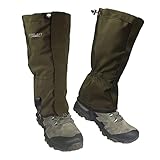
Gaiter history traces back to 1700s military infantry, where soldiers relied on them for field durability. That utilitarian foundation carried forward into hiking, skiing, and trail running applications. Modern gaiter accessories, including underfoot straps and reinforced instep guards, refine the fit and extend durability. They reduce blisters, repel debris, and add warmth — straightforward gear built for those who move through demanding environments without compromise.
When You Actually Need Gaiters?
Gaiters earn their place in a kit when the activity or environment demands protection from the elements that standard footwear cannot provide on its own. Hikers, trekkers, snowshoers, trail runners, and field workers all encounter conditions where debris, dampness, or snow will compromise both comfort and function without a proper barrier in place. Rough terrain, wet weather, deep snow, and unpredictable backcountry conditions are the clearest indicators that gaiters belong on the gear list.
Activities Requiring Gaiter Use
Whether traversing snow-covered trails or pushing through dense undergrowth, gaiters serve a distinct purpose across a range of demanding outdoor activities. Their versatility makes them indispensable across multiple disciplines.
Hikers and trekkers rely on gaiter benefits in muddy or snowy terrain, blocking dampness and debris from penetrating footwear. Off-track bushwalkers and mountaineers gain added defense against branches, rocks, and rough ground. Ski tourers and snowshoers use them to seal out snow while retaining warmth.
Trail runners opt for lightweight models that prevent gravel and dirt from irritating feet during hard-paced runs. Fieldworkers and those tackling yard work benefit from gaiters versatility, gaining protection against water, snow, debris, and even snake bites in high-risk regions. Each application demands reliability without compromise.
Weather and Terrain Conditions
Knowing which activities call for gaiters is only half the equation — the specific weather and terrain conditions encountered determine whether wearing them shifts from useful to non-negotiable. Deep snow conditions demand knee-high gaiters for insulation and barrier protection against dampness infiltration. Wet terrain pairs best with waterproof gaiters shingled over rain pants, sealing boots against persistent ground saturation. Dense underbrush, rocky trails, and thorny vegetation introduce debris that compromises foot comfort over long distances. Extreme alpine environments expose gear to ice, sharp crampons, and relentless wind-driven snow, requiring heavy-duty construction. Moreover, thick vegetation in remote regions raises the risk of wildlife encounters, including snake strikes — gaiters absorb and deflect initial contact, reducing exposure. Terrain dictates the threat; conditions determine the response.
The Real Reasons Outdoor Enthusiasts Wear Gaiters
Practicality drives most outdoor enthusiasts to gaiters, regardless of whether the reasoning isn’t immediately obvious. Once field-tested, the evidence speaks for itself.
Four reasons outdoor enthusiasts rely on gaiters:
- Debris exclusion — Dirt, gravel, and stones stay out of boots, delivering direct comfort improvement and reducing blister formation on long pushes.
- Moisture defense — Wet brush, snow, and rain get blocked, keeping feet dry and functional in brutal conditions.
- Injury prevention — Covered ankles reduce lace snags and tripping hazards across unpredictable terrain.
- Sustained performance — From mountaineering to snowshoeing, gaiters preserve output when environments turn unforgiving.
Freedom in the backcountry demands reliable gear. Gaiters earn their place through proven, straightforward protection.
Types of Gaiters and What Each One Is Built For
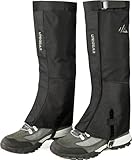
Not all gaiters serve the same purpose, and selecting the wrong type undermines the protection they’re meant to deliver. Hiking benefits include lightweight, breathable designs that block light rain, snow, and trail debris while maintaining ventilation in warmer conditions. Mountaineering gaiters shift toward heavy-duty, fully waterproof construction, engineered for ice climbing, backcountry skiing, and sustained exposure to brutal environments. Trail running gaiters strip everything down — compact, minimal, focused entirely on keeping dirt and debris clear of the shoe. Height matters similarly. Ankle-height models suit fast-moving terrain; knee-high versions handle deep snow and unforgiving backcountry conditions. Recent gaiter innovations have improved material durability, breathability, and footwear compatibility across all categories. Matching the gaiter to the specific activity and boot system determines whether they perform or simply add dead weight.
How Gaiter Height Affects Protection and Comfort
Gaiter height is one of the most consequential decisions in the selection process, directly determining how much protection reaches the lower leg under real conditions. Understanding comfort trade offs across heights empowers smarter gear choices.
- Knee-height (15–18″) — Conquers deep snow, flood-level water, and brutal weather without compromise.
- Mid-calf (8–12″) — Handles moderate terrain and mixed conditions, balancing coverage against mobility.
- Over-the-ankle — Blocks debris and pebbles during trail running and light hiking where agility matters most.
- Shorter low-profile gaiters — Strips away bulk entirely, keeping dirt out during fast-moving trail pursuits.
Each gaiter height serves a distinct environment. Matching height to conditions eliminates unnecessary suffering and keeps movement unrestricted.
Gaiter Materials and Features That Actually Matter
Most gaiter materials fall into a short list worth knowing: nylon, polyester, and Cordura handle abrasion and daily punishment across rough terrain, while leather appears in heavy-duty models where maximum protection outweighs weight concerns. Gaiter comparisons become straightforward once material benefits are understood. Gore-Tex and eVent serve wet environments, keeping feet dry through rain and snow. Soft-shell fabrics deliver flexibility without sacrificing weather resistance, valuable during dynamic movement across varied terrain. Adjustable hook-and-loop closures and instep straps lock fit against different calf sizes and boot shapes, blocking dampness and debris at the entry points that matter most. Certain models carry insect repellent treatments, a practical advantage in bug-heavy environments where exposure time runs long.
How to Size Gaiters Correctly for Your Boots
Sizing gaiters correctly starts with matching boot or shoe size to the gaiter’s listed range, since a mismatched fit creates gaps where wetness and debris enter. Gaiter compatibility depends on more than length — calf circumference determines whether the seal holds under real conditions.
Sizing tips that protect every mile:
- Measure calf circumference before purchasing — snug fits prevent humidity infiltration without restricting movement.
- Target a half-inch hook-and-loop overlap on adjustable entry systems to reinforce the seal.
- Larger mountaineering boots require gaiters with adjustable features — secure every closure completely.
- Consult brand-specific size guides without exception — gaiter sizing varies significantly across manufacturers.
Cutting corners on fit means surrendering protection when terrain demands it most.
Putting Gaiters On the Right Way
Proper gaiter installation begins with positioning the hook-and-loop closures at the front for straightforward access and adjustment. The instep strap buckles should sit on the outside of the boot, with straps running through the instep area to create a tight seal against debris and prevent accidental kicks. Once positioned, the top closures are snugged down firmly enough to prevent slippage without restricting circulation or movement.
Positioning Gaiters Correctly
Positioning gaiters correctly begins with orienting the hook-and-loop closures toward the front of the legs, where they remain accessible for quick adjustments in the field. Proper gaiter fit directly impacts mobility considerations, keeping movement unrestricted across demanding terrain.
- Pre-adjust instep straps before wearing — loose straps compromise stability mid-trail
- Route buckles outward — interior buckles invite painful kicks on uneven ground
- Overlap hook-and-loop closures by half an inch — anything less invites dampness, debris, and failure
- Fasten every snap and closure at both top and bottom — half-secured gaiters abandon their purpose when conditions worsen
Each step serves the same mission: protection that holds without demanding attention. Correctly positioned gaiters disappear into the experience, letting terrain remain the only challenge worth thinking about.
Securing Instep Straps Properly
Securing instep straps correctly determines whether gaiters function as intended or fail at the first sign of rough terrain. Instep strap adjustments should happen before the gaiter goes on the boot — not after. Pre-setting the length saves time and guarantees a snug, workable fit from the start.
Buckles belong on the outside of each boot. That placement keeps them clear of the opposite foot’s path, eliminating accidental kicks during movement. Once positioned, the strap routes directly through the instep area, running beneath the boot as designed.
Securing gaiter fit comes down to tension. Straps pulled tight create a sealed barrier at the gaiter’s base, blocking dampness, mud, and debris from compromising footwear. Loose straps invite exactly the problems gaiters are built to prevent.
Tightening Top Closures Securely
With the instep strap locked down, attention moves upward to the top closure. Gaiter fit depends heavily on how well this final seal holds. Adjusting straps correctly at the top keeps debris, humidity, and cold air out when terrain gets brutal.
- Position hook-and-loop closures at the front for quick field adjustments without removing gear.
- Snug the top closure firmly — loose means slipping, and slipping means failure on the trail.
- Use adjustable features for larger calves, eliminating dangerous gaps that invite mud and water.
- Fasten all secondary snaps at top and bottom to lock everything in place under pressure.
Always adjust with the same footwear worn during activity. Consistency here determines whether gaiters perform or just ride along.
Cleaning and Storing Gaiters So They Last
Gaiters that see regular trail use take a beating, and proper maintenance is what separates gear that lasts a season from gear that lasts a decade. Gaiter maintenance starts with proper washing after every outing — mild soap or specialized gear wash, a soft brush, and water handle trail grime without degrading protective materials. Full air-drying before storage is non-negotiable; trapped dampness breeds mold and kills gear fast. Store them flat or rolled in a cool, dry location away from direct sunlight or heat sources that slowly break down fabric and coatings. Folding creates damaging creases. The cleaning process additionally doubles as an inspection window — check seams, closures, and fabric for wear during each wash cycle to catch small repairs before they become field failures.